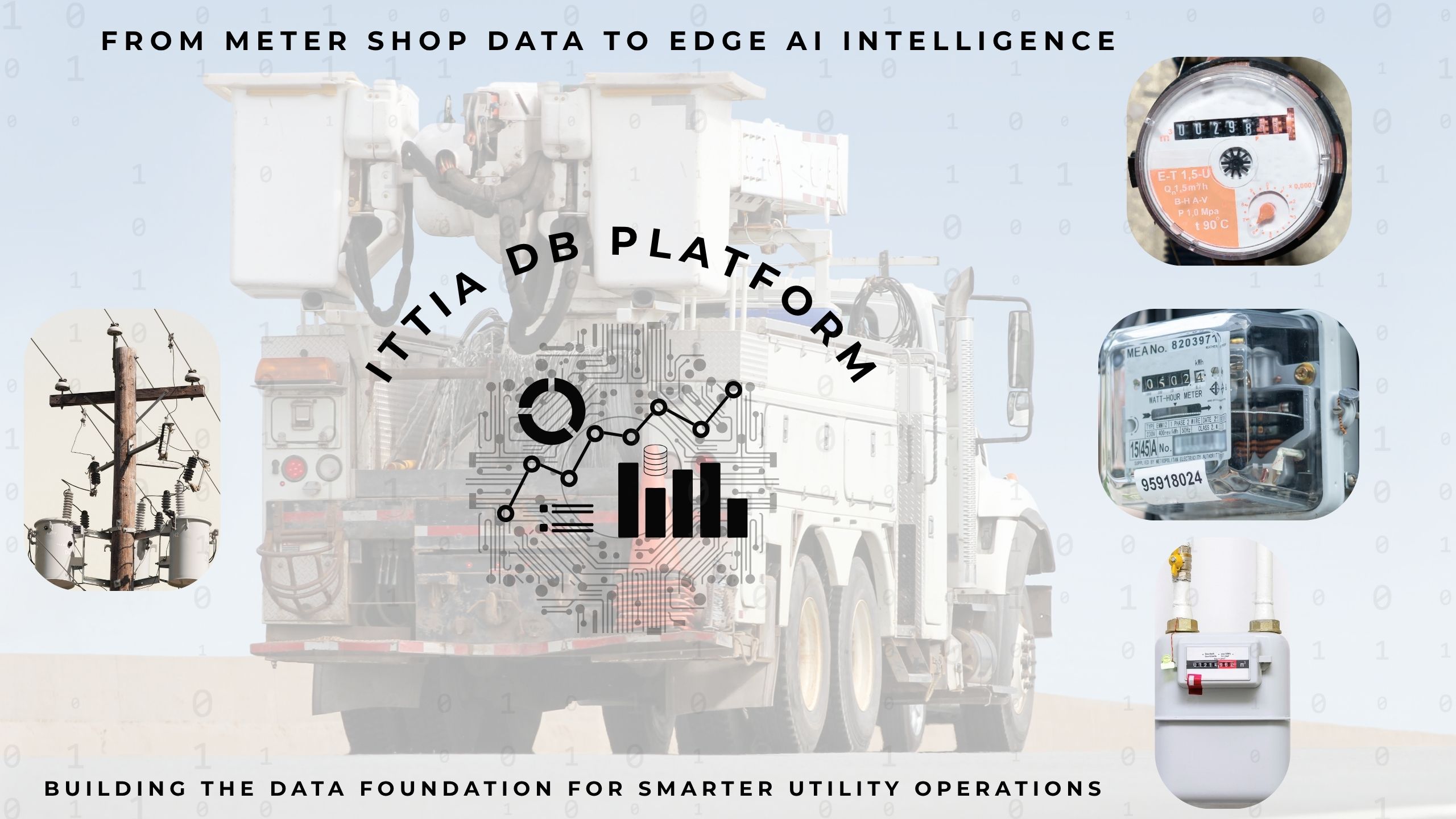
From Meter Shop Data to Edge AI Intelligence
Building the Data Foundation for Smarter Utility Operations
Meter shops play a critical role in the operational and financial health of utility companies. Every electric, water, or gas meter represents a revenue-producing asset that must be tested, calibrated, configured, deployed, maintained, and eventually retired. As utilities modernize their infrastructure with AMI, smart meters, connected field devices, and digital operations, meter shop automation is no longer simply about improving workflow efficiency. It is becoming a foundation for data-driven utility operations.
A modern meter shop must manage the complete lifecycle of each meter. This includes receiving new meters, recording serial numbers, tracking firmware versions, pairing communication modules, managing inventory, performing accuracy testing, capturing calibration results, recording repairs, supporting field deployment, and maintaining a complete history of every action performed on each device. When these processes are handled manually or through disconnected spreadsheets, utilities face higher risks of errors, lost traceability, delayed billing updates, inventory mismatches, and incomplete compliance records.
The Data Challenge Behind Meter Shop Automation
At the heart of meter shop automation is data. Every meter generates and depends on multiple types of data: asset records, test results, calibration history, firmware information, AMI endpoint identity, configuration settings, field installation history, maintenance events, and retirement records. This data must be reliable, searchable, secure, and available across different parts of the utility organization.
The challenge becomes more complex as smart meters and AMI systems introduce additional layers of communication, configuration, and cybersecurity requirements. A meter is no longer only a measurement device. It is also a connected edge device with firmware, communication credentials, operational history, and configuration state. The meter shop must therefore manage both the physical meter and its digital identity.
This is where utilities need more than a workflow tool. They need a strong data infrastructure that can collect, manage, process, and preserve trusted meter data throughout the asset lifecycle.
Why ITTIA DB Platform Matters
ITTIA DB Platform provides the embedded and edge data infrastructure needed to support modern meter shop automation and smart utility operations. It enables reliable data management across connected devices, local gateways, shop systems, and edge applications where deterministic performance, traceability, and long-term reliability are essential.
With ITTIA DB Platform, utilities and solution providers can build systems that manage meter-related data closer to where it is created and used. This includes data captured from test stations, calibration equipment, smart meters, AMI endpoints, field service tools, and local utility systems. Instead of relying on temporary files, fragmented logs, or manual exports, ITTIA DB Platform provides a structured and reliable foundation for storing and processing operational data.
For meter shop automation, this means each meter can have a trusted historical record that includes test results, configuration changes, firmware updates, repair activity, installation events, and quality-control decisions. This history helps utilities improve accountability, reduce errors, support audits, and make better decisions about repair, redeployment, replacement, and retirement.
From Workflow Automation to Operational Intelligence
Traditional meter shop automation focuses on improving process efficiency: scanning meters, assigning work steps, recording test results, managing inventory, and updating enterprise systems. These capabilities are important, but the next generation of utility operations requires more than automation. It requires operational intelligence.
Operational intelligence begins when the data collected by the meter shop becomes useful for decision-making. Utilities can analyze which meter models fail most often, which firmware versions create problems, which batches require retesting, which field regions experience higher return rates, and which meters should be prioritized for replacement. This information can reduce costs, improve billing accuracy, and strengthen reliability.
ITTIA DB Platform helps enable this transition by making meter data persistent, organized, and analytics-ready. By preserving historical context, utilities can move beyond isolated events and begin understanding patterns across devices, locations, manufacturers, usage conditions, and time.
The Role of Edge AI in Meter Shop Automation
Edge AI adds another important layer of value. Once meter data is reliably collected and managed, AI can be used to detect patterns, predict failures, classify abnormal behavior, and support smarter operational decisions.
For example, Edge AI can help identify meters that are likely to fail testing, detect abnormal calibration drift, recognize recurring failure signatures, predict inventory demand, or recommend whether a returned meter should be repaired, redeployed, or retired. AI can also help correlate meter shop test results with field performance, AMI communication events, and customer usage patterns.
However, AI depends on good data. Without reliable historical records, consistent data structures, and traceable processing, AI results can be difficult to trust. ITTIA DB Platform provides the data foundation that allows Edge AI applications to work with structured, persistent, and explainable data.
ITTIA DB Lite AI: Bringing Intelligence Closer to the Device
For embedded and edge environments, ITTIA DB Lite AI extends the value of ITTIA DB Lite by enabling data-centric AI workflows directly on resource-constrained devices and edge systems. In utility applications, this can support local processing of meter data, feature generation, anomaly detection, and AI-ready data preparation before information is sent to higher-level systems.
This is especially valuable when utilities need local intelligence, reduced latency, lower bandwidth usage, or continued operation during limited connectivity. Instead of sending every raw data point to a central system, edge devices can process data locally, extract meaningful features, preserve important history, and generate insights closer to the source.
For meter shop and utility environments, this can enable smarter test stations, intelligent gateways, field diagnostic tools, and edge applications that understand device history and operating conditions. The result is faster decision-making, better traceability, and more reliable automation.
Building a Connected Utility Data Architecture
Meter shop automation should not operate in isolation. It should connect with the utility’s broader ecosystem, including AMI head-end systems, meter data management, customer information systems, ERP, asset management, GIS, field service systems, and billing platforms.
ITTIA DB Platform can play an important role in this connected architecture by supporting reliable data movement, local data management, and edge-to-enterprise integration. With the right data foundation, meter shop events can be synchronized with field operations, inventory systems, billing records, and analytics platforms.
This helps reduce mismatches between what is installed in the field, what is recorded in enterprise systems, and what is known by the meter shop. It also creates a more complete and trustworthy view of each meter as a connected asset.
Improving Compliance, Traceability, and Audit Readiness
Utilities must be able to demonstrate that meters are properly tested, calibrated, configured, and maintained. This requires accurate records, repeatable procedures, and a clear audit trail.
ITTIA DB Platform supports this need by enabling persistent data records and traceability across device and system operations. For meter shop automation, this means utilities can maintain evidence of test results, technician actions, calibration history, firmware updates, configuration changes, and approval decisions.
This traceability is important not only for regulatory compliance but also for internal quality control, customer dispute resolution, warranty claims, and long-term asset planning.
A Data-First Path to Smarter Utilities
The future of meter shop automation is not only about faster scanning, better inventory control, or automated test equipment. It is about building a data-first foundation that supports smarter utility operations.
By combining meter shop automation with ITTIA DB Platform, utilities can create reliable, traceable, and intelligent data infrastructure for the full meter lifecycle. With the addition of Edge AI, this foundation can evolve into predictive and decision-support capabilities that improve reliability, reduce cost, and strengthen operational performance.
As utilities continue to modernize, the meter shop can become more than a service and testing center. It can become a strategic source of operational intelligence.
ITTIA DB Platform helps make this possible by providing the embedded and edge data management foundation required to collect, manage, process, and transform meter data into trusted insights. Together with ITTIA DB Lite AI and the broader ITTIA DB Platform product family, utilities and solution providers can build the next generation of intelligent, connected, and reliable utility systems.
